
Blogs

Expert-led security services delivered with trust, responsiveness, and a long-term view

18
Jul

Simplifying Access Management for a 100-User Organization

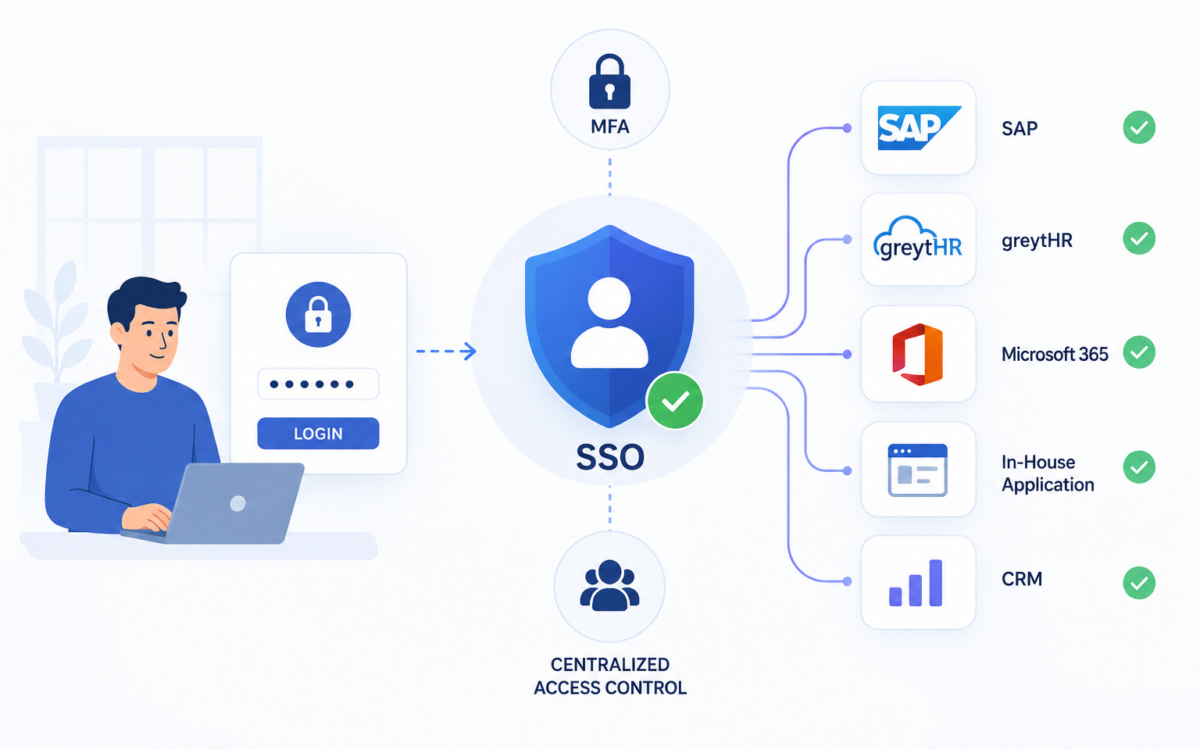
Customer Profile Organization Size: 100 Employees Applications: 5 Business Applications (e.g., SAP, greytHR, Microsoft 365, CRM, and Internal Applications) Business Challenge As organizations adopt multiple business applications, employees often manage separate usernames and passwords for each system. This results in: Password fatigue and frequent password reset requests Reduced employee productivity…

2
Jul

Implementing DPDPA Compliance – Best Practices & Roadmap

With the Digital Personal Data Protection Act (DPDPA), 2023 moving towards full implementation, organizations across industries are preparing to align their people, processes, and technology with the new privacy requirements. While understanding the Act is the first step, achieving compliance requires a structured approach that integrates data privacy into everyday…
30
Jun

DPDPA Compliance Requirements – Rights, Obligations & Governance

The Digital Personal Data Protection Act 2023 (DPDPA) establishes a comprehensive framework for protecting and processing digital personal data in India. The Digital Personal Data Protection Act 2023 empowers individuals with greater control over their personal information while creating compliance responsibilities for organizations handling personal data. Compliance with the DPDPA…
26
Jun
Digital Personal Data Protection Act (DPDPA) 2023 compliance guide

Understanding the Digital Personal Data Protection Act (DPDPA), 2023

In today’s digital economy, personal data has become one of the most valuable assets for organizations. Every interaction, whether through websites, mobile applications, online transactions, or employee systems that generates personal information that organizations collect and process. As businesses increasingly rely on digital technologies, protecting this data has become essential…
10
Mar

Continuous Authentication

In an era where cyber threats are continuously evolving, traditional authentication methods—such as passwords and one-time verification codes—are proving increasingly inadequate. These static methods authenticate users only at the initial point of access, leaving sessions vulnerable to hijacking and unauthorized activities. Continuous authentication emerges as a robust solution, persistently verifying…
Scroll to top